
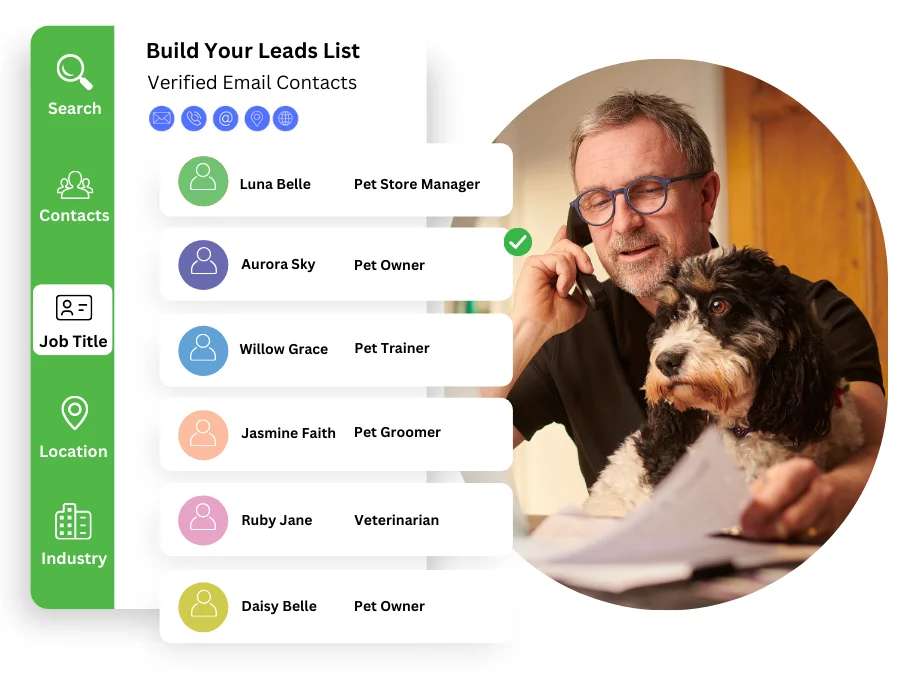

You can buy pet owner email lists from companies that sell consumer data. These lists are often customizable by pet type or location. Just make sure the data is permission-based and updated regularly so you’re contacting real, interested pet owners—not outdated addresses.
The most reliable databases usually come from sources that clean and verify their contact lists often. Look for providers that update data every month or so, follow email laws, and offer filters like location or pet type to help you narrow your outreach.
These mailing lists usually include the owner’s name, email, phone number, address, and pet details like species or breed. Some also note spending habits. With this info, businesses can send more relevant emails that match the pet owner’s actual needs or interests.
Yes, many lists let you filter contacts based on pet type—whether it’s dogs, cats, birds, or reptiles. This makes it easier to tailor your emails and offer the right products or services for each pet group, increasing the chance of getting a response.
It’s legal if the email list was collected with permission and follows rules like CAN-SPAM or GDPR. Always include an unsubscribe link in your emails, and avoid lists that were gathered without user consent—that could get you into trouble.
Prices can vary depending on how many contacts you want and how specific the list is. Some cost a few hundred dollars, while larger or more detailed lists can be more expensive. You might also find pay-per-contact or monthly subscription options.
Yes, most lists can be sorted by the kind of pet someone owns, where they live, or how they shop. This helps businesses send messages that feel more personal and relevant, which usually leads to better responses from the people you're reaching out to.
Absolutely. Many companies use these lists to market grooming, vet visits, training sessions, or pet insurance. Since you're reaching actual pet owners, your services are more likely to be seen as useful rather than random or irrelevant.
They use the lists to send updates, special offers, and care tips. Some share seasonal reminders, while others promote new products. It's all about staying connected with pet owners and keeping them engaged with helpful content or discounts they actually care about.
Yes, you can choose a list that targets pet owners in the U.S. or expand to global markets. You can even narrow it down to certain states, cities, or regions depending on where your business operates or where you'd like to grow.
Good email databases are updated often—sometimes monthly, other times every few months. Frequent updates help remove inactive addresses and keep your outreach efforts effective. This also lowers the chance of emails bouncing or being marked as spam.